Advertisement
You spend six months choosing the name. You research meanings, you check the initials, you say it aloud twenty times, you write it on the birth certificate. Then your mother-in-law arrives from Ahmedabad, holds the baby, and calls her Pinky within four hours. That name will stick for the next forty years. Your carefully chosen first name will be for teachers and dentists. Pinky is for family.
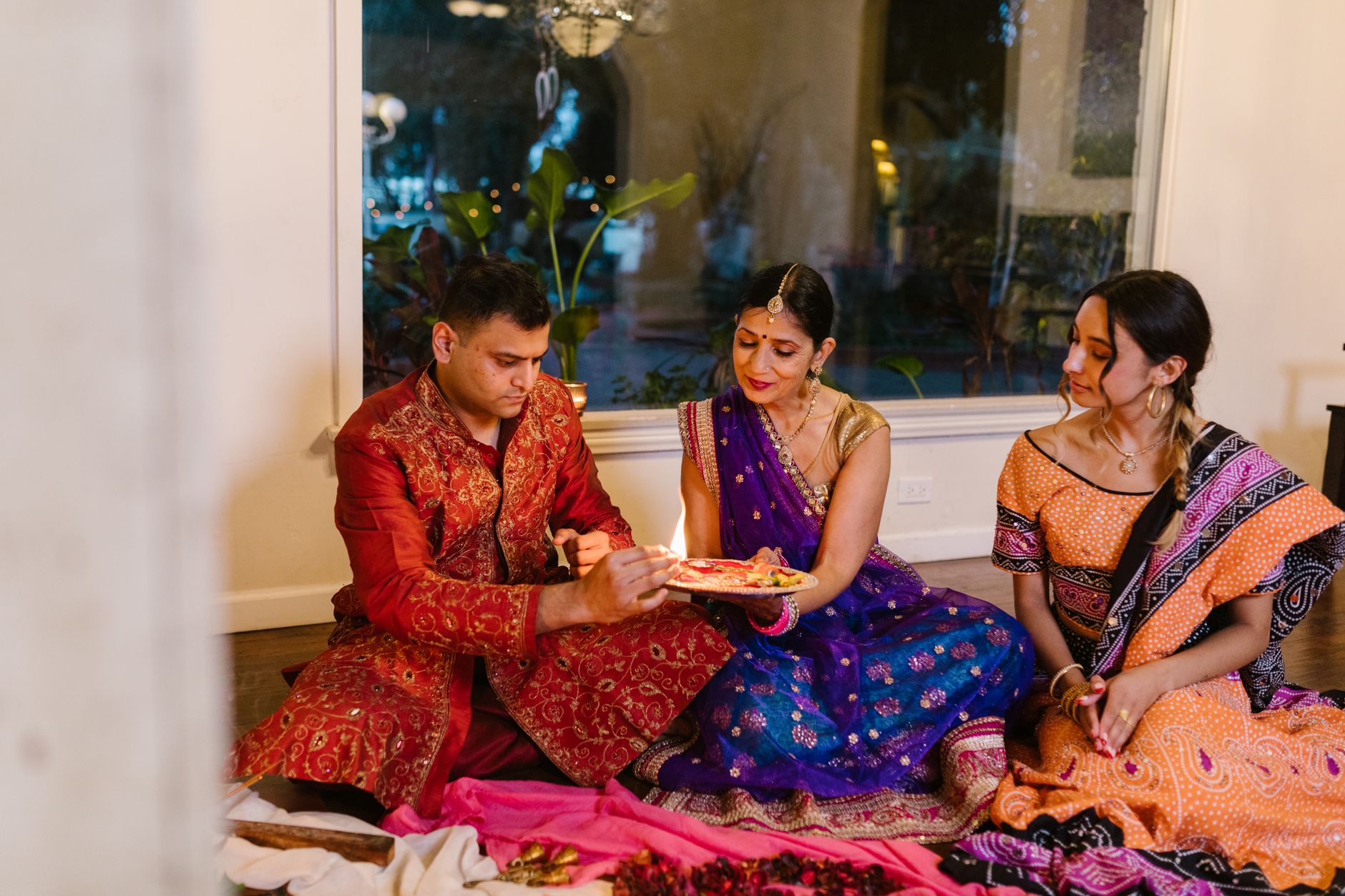
This is not a failure of your choice. It is a feature of Indian family culture. The formal name is one thing. The pet name is another thing entirely, sometimes chosen independently, sometimes assigned on the spot by an elder based on how the baby looks, sounds, or acts. US parents raising a child in an Indian extended family should understand this system before assuming the birth certificate name is the one that will be spoken at home.
Advertisement
The two-name tradition explained
Many Indian communities, especially Bengali, Gujarati, Marathi, Punjabi, and Tamil families, maintain a distinction between two categories of name. The formal or public name goes on school forms, on identity documents, and on the wedding invitation. The pet name lives inside the home and inside the extended family. It is spoken by parents, grandparents, aunts, uncles, and cousins. It rarely appears in writing. It rarely reaches teachers. It is the name the child hears most often for the first ten years of their life.
In Bengali tradition the pet name is called dak naam. In Gujarati it is often called ghar nu naam, or house name. Different regions use different terms. The pattern is the same. Two names. One official. One warm.
Worked example: the Patel family in Naperville
Meet the invented but very plausible Patel family. Suburban Chicago, one baby girl born in October, extended family in Ahmedabad and London. Parents choose the name Anaya for the birth certificate. They love it. It sounds contemporary. It transfers well between English and Gujarati mouths. It fits nicely with the surname. Anaya is the plan.
Week one: dadi arrives
Grandmother arrives from Ahmedabad. She sees the baby has round cheeks and a habit of squinting when she cries. Within forty-eight hours dadi is calling her Mithu, which means little sweet thing. Anaya is not used by dadi even once during the two-week visit.
Week three: the aunt in London calls
Baba's sister calls from London. She has decided the baby will be Ana, a shortened form of Anaya she can say faster. This is a different pet name entirely from Mithu. The baby now has three names in circulation: Anaya at the doctor, Mithu at home, Ana for the London aunt.
Month two: the extended cousins get involved
The teenage cousins in Chicago hear dadi and start calling the baby Mithi as a slight variant. By the time the six-month milestone rolls around, at least five different pet names have been used in the extended family, and one has begun to dominate. In this example, Mithu wins because dadi established it first and used it hardest.
Year one: the school problem
The baby is now called Anaya at daycare and Mithu at home. Both feel like her name. This is fine. This is how it works for millions of Indian American children. She will not be confused.
How pet names get assigned
Elders in Indian families do not always ask permission before assigning a pet name. The name comes out of a moment: how the baby looks in a photo, a syllable of the formal name shortened, a mispronunciation that stuck, a Sanskrit or regional-language word for something small and precious. Common patterns include:
- A soft syllable extracted from the formal name (Anaya to Ana, Rohan to Ro, Priya to Pri).
- A word for something small or sweet in the family's regional language (Mithu, Chotu, Guddi, Munni, Babu).
- A descriptor based on the baby's appearance (Golu for chubby, Kaali for dark-eyed, Chinku for small).
- A rhyming or doubled version of a syllable (Baba, Dada, Titu, Tinku).
- An English pet name adopted for cross-generational ease (Pinky, Bunty, Sonu).
None of these require the parents' approval. That is the surprising part for US-born parents who assumed naming was their sole authority. In many Indian family structures, naming is a communal act, and pet naming is where the community exercises its share.
What you can and cannot control

You can control the formal name completely. That is your legal choice. It goes on the certificate. It goes to school. It is what teachers, coaches, and eventually employers will use.
You cannot fully control the pet name. If dadi says the baby is Mithu, dadi's contemporaries will follow her lead. You can try to redirect. You can request. But if the pet name feels natural to the elder and the baby responds to it, it will win.
You can, however, do three things to shape the outcome. First, propose a pet name of your own before an elder assigns one. If you say Ana from day one, dadi may adopt Ana rather than invent her own. Second, choose a formal name that shortens naturally into a version you can live with. Rohan easily becomes Ro or Rohu, both of which are pleasant. If you like the shortenings, the pet name will likely stay within your preferred territory. Third, accept the ones you cannot change. The pet name is an act of affection. Fighting it hurts feelings more than it changes behavior.
The public-private mapping
| Formal name | Likely family pet names | Who uses them |
|---|---|---|
| Anaya | Mithu, Ana, Anu, Nayya | Grandparents, aunts, close cousins |
| Rohan | Ro, Rohu, Chotu, Sonu | Parents at home, extended family |
| Priya | Pri, Piya, Guddi | Grandparents, aunts |
| Arjun | Arju, Ajju, Babu | Home use, cousins |
Notice that Babu, Sonu, and Guddi are not derived from the formal name at all. They are generic terms of endearment applied to any child. That is normal. In some families every young child is Babu until they outgrow it.
The name your child hears most often for the first decade of their life may not be the name printed on the certificate. Design for both.
When the pet name follows the child too far
The one situation to watch is when a pet name attempts to leave the house. If the pet name is used in front of school friends who then adopt it, the child may find themselves unable to escape a name like Chotu into their teenage years. Most families instinctively guard against this by using formal names in public settings. If your family does not, gently establish the rule that the formal name is what the world hears. This matches the logic in planning family-only nicknames that stay at home.
The other trap is when the pet name accidentally sounds like something unfortunate in English. Bunty, Pinky, and Sunny all carry associations in American middle-school culture that may or may not land well. This is a specific case of the broader problem covered in nicknames that translate to slurs in a second language.
For the practical mechanics of pet names sticking, see nicknames you cannot stop after the certificate and think about the whole system in advance rather than reacting to it later.
Frequently Asked Questions
Can I refuse to let grandparents give a pet name?
You can try. In most Indian family structures the request will be honored on the surface and quietly ignored in practice. A gentler approach is to propose your own pet name first and hope it takes.
What if I do not like the pet name that stuck?
Say so, once, to the elder who established it. Then let it go. Fighting a pet name for years damages the relationship more than it changes the name.
Will my child be confused having two names?
No. This is the normal experience of most Indian American children. They understand at a very young age that dadi calls them one thing and their teacher calls them another, and both are theirs.
Do I put the pet name on any paperwork?
Generally no. The pet name is spoken, not written. It rarely appears on school forms, medical records, or official documents. It is a family artifact.
Do boys get pet names too?
Yes, universally. Chotu, Babu, Sonu, and shortened forms of the formal name are all standard for boys. The tradition applies across genders.