Advertisement
Picture the birth announcement email going out to grandparents in three cities: Buenos Aires, Mumbai, and Chicago. Same six letters printed on the certificate. Three completely different sounds coming back on the video calls that week. The abuela draws out the second vowel, the nani gently adds a soft consonant that was never there, and the Illinois grandfather nails it flat and quick. Same name, three destinations.
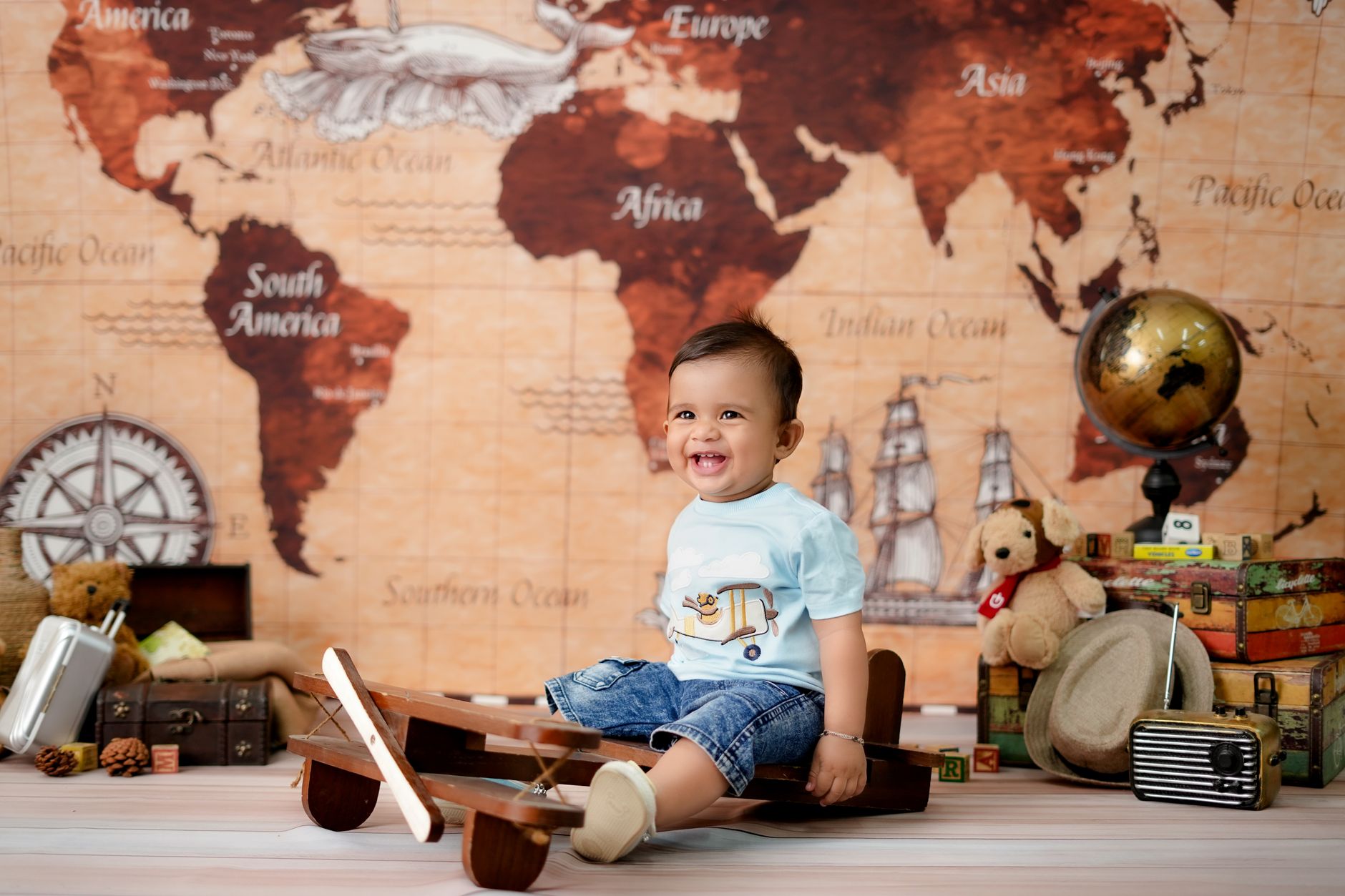
That gap is what this article calls the travel of a name. Every shortlist you love will make this journey the moment your child enters daycare, meets extended family, or sits in a classroom of first-generation kids. Some names travel light. Others arrive scrambled.
Advertisement
What travels actually means for a name
When a name moves between languages, four separate things can shift, and they usually shift independently. The letters on the page might survive intact while the sound underneath collapses. The sound might survive while a stray meaning appears in a language you did not think to check. Understanding which layer moves helps you decide whether to accept the drift or reach for a different name.
Layer one: spelling
Not every alphabet contains the letters your name uses. A name spelled with a W has to be respelled to enter Cyrillic. A name spelled with Th cannot preserve that digraph in Spanish paperwork without an accent mark. A name spelled with double L means one thing to an English registrar and another to a Spanish one. When your child's passport is issued abroad or their name appears in a school database in a country using a different script, the spelling changes first.
Layer two: sounds
Every language has a fixed set of sounds it can produce comfortably. If your name uses a sound the target language does not contain, speakers do not fail politely. They substitute the nearest sound available. English R becomes Japanese L-ish flap. Spanish rolled R becomes English tap. French uvular R becomes almost nothing for an American ear. These substitutions are not mistakes. They are the language doing what it has to do.
Layer three: stress
Where the loud beat falls inside a name changes how the name feels. Ma-RI-a and MA-ri-a are the same six letters and two entirely different names in the ear. Stress patterns are stubborn. A name imported into a new language usually snaps to the stress rules of that language, whether the parents like it or not.
Layer four: accidental meaning
The riskiest travel is when a name that means nothing in its home language accidentally means something specific in a second one. Sometimes that meaning is charming. Sometimes it is a household object, a slang term, or worse. This is the layer parents most often miss because they only stress-test the name in the languages they speak.
Seven steps to check how your shortlist travels
- List every language your child will hear regularly in the first ten years, including one language spoken by extended family even if not in the home.
- For each language, find one native speaker who is not your relative. Family members soften their reactions.
- Send them the written name only, not a pronunciation guide. You want their cold read.
- Record the version they say and listen back with your partner.
- Ask if the sound reminds them of any word, product, or public figure in that language.
- Note whether they naturally shorten it or add a syllable to make it easier.
- Compare all recordings side by side. If one version feels like a different name entirely, that is real data.
The whole process takes about a week and costs nothing. Skipping it is the source of most regret you read in parenting forums two years after the name is chosen.
A worked example with three names
Consider Julian, Amelia, and Kai as a shortlist. Here is what a cross-language check turns up.
| Name | English | Spanish | Japanese approximation | Sticking point |
|---|---|---|---|---|
| Julian | JOOL-yun | hoo-lee-AHN | joo-ree-AN | Stress moves to the last syllable in Spanish, hard J vanishes |
| Amelia | uh-MEEL-yuh | ah-MEH-lee-ah | a-me-ri-a | Fourth syllable added in Japanese, hard L becomes soft |
| Kai | KYE | KAI | KA-i | Splits into two syllables in Japanese but keeps the letters |
Kai travels the lightest. Amelia travels well but grows a syllable. Julian survives on the page and completely changes in the ear. None of these is a disqualifying result. They are just the honest picture of what the name becomes when your family scatters. This is the same instinct that drives our discussion of the sound of a name against a surname, only applied across languages instead of across the two halves of the full name.
When to accept the drift and when to change
Not every drift is a problem. If your child grows up in a bilingual household, they will collect two versions of their name naturally and answer to both by age four. That is the ordinary experience of most kids in immigrant families. The drift becomes a problem in three situations.
First, when the drift creates a real word in a language your child hears daily. If Amelia sounds like a common household verb in your second language, that will follow the child. Read how ordinary English names can land oddly in Portuguese for concrete cases of this pattern.
Second, when the stress shift changes the gender-signaling of the name inside a relative's culture. This is common with Slavic and Arabic families where masculine and feminine endings are strict.
Third, when the sound substitution turns the name into something the child cannot even hear as their own. A name a grandparent cannot pronounce is a name that grandparent will not use. Over years, that shapes the relationship.
A name is a small object that has to fit inside every mouth that will ever say it out loud to your child. Test it in those mouths before you file it with the state.
The middle-name safety net
If a first name you love does not travel well, the middle-name slot can carry the version that does. Many bilingual families settle on a first name that works in the country they live in and a middle name that honors the second language. The child then has a legal version for school and a family version for holidays. Grandparents relax. The child grows up understanding they have two mouths for their one name, which is a gift, not a burden.
This same logic drives the way two-culture couples divide the naming decision, and it works because it turns a compromise into a design.
Frequently Asked Questions
Should I change the spelling to match the language my family speaks?
Change the spelling only if your child will live long-term in that language environment. Otherwise you are handing them a lifetime of spelling their name for English forms. Keep the original spelling and let the pronunciation drift naturally where it needs to.
What if my parents cannot say the name at all?
A relative who cannot pronounce a name will invent a nickname within weeks. Rather than resist this, ask them ahead of time what version they would use, and decide whether that version is one you can live with hearing at family gatherings for eighteen years.
Does the sound in one language matter if we never visit?
Only marginally. The languages that matter are the ones your child will hear regularly: from parents, grandparents, teachers, and community. A name that lands badly in a language nobody around your child speaks is trivia.
Can we teach the correct pronunciation and expect it to stick?
In some settings, yes. In a US public school with a busy teacher, corrections fade by third grade. Choose a name whose accepted mispronunciation you can live with, because that is the version your child will hear more than any other.
What about names that are the same across languages?
Names like Anna, Sara, Mia, and Leo travel almost unchanged across most major languages. The tradeoff is that they carry less specific cultural signal. Consider the ethnic-neutral versus culturally rooted question before treating universal readability as a pure win.