Advertisement
Monograms feel like a small piece of etiquette that only a grandmother would fuss over, until someone hands you a linen towel embroidered with three letters and you realize you cannot decode which letter is the surname. Which of the three is bigger? Why is the middle one taller? Is that the child's name or the mother's maiden line?
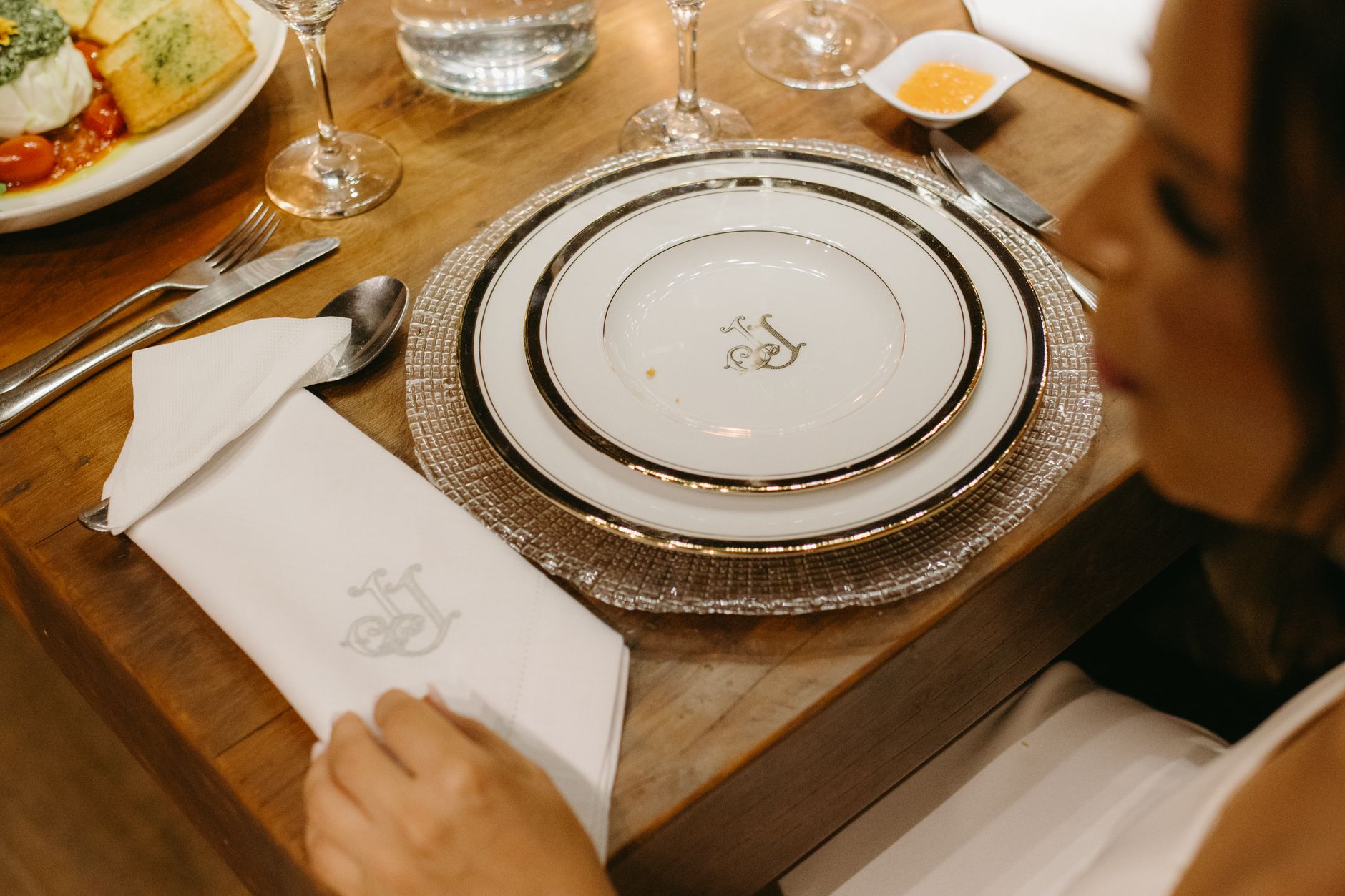
Here is a beginner primer that explains where the tradition comes from, how it reads on modern nursery goods, and what a new parent needs to know before they order the first monogrammed anything.
Advertisement
The traditional order
The classic Western monogram uses three initials arranged with the surname initial in the middle, printed larger than the other two. First-name initial appears on the left in a smaller size. Middle-name initial appears on the right in the same smaller size. So a child named Ava Louise Sinclair would receive a monogram that reads A S L, with the S larger and centered.
This visual order runs against the way English speakers read a name aloud. It exists because a monogram is a family mark first and a personal mark second. The surname anchors the household, and the two personal initials frame it.
The modern block monogram
A more recent style, popular on nursery signage and Etsy listings, prints the three initials at the same size in reading order: first, middle, last. A L S. This block monogram is easier to read and easier to design. Most modern nursery pieces use it. Grandparents ordering heirloom items may still default to the traditional stacked style.
Neither is wrong. Confusion happens when the parents order one style and the grandparent orders the other, and both pieces end up on the same shelf.
What to check before you order
- Confirm the three initials, in the order you want them, in the style you want (block or traditional stacked).
- Send a proof back to the vendor with the letter sizes labeled. Even reputable embroiderers occasionally reverse the middle letter.
- If two or more family members plan to order monogrammed gifts, coordinate on the style once so the pieces match.
- For a nursery reveal, run the reveal planning checklist alongside this one.
Where monogram traditions came from
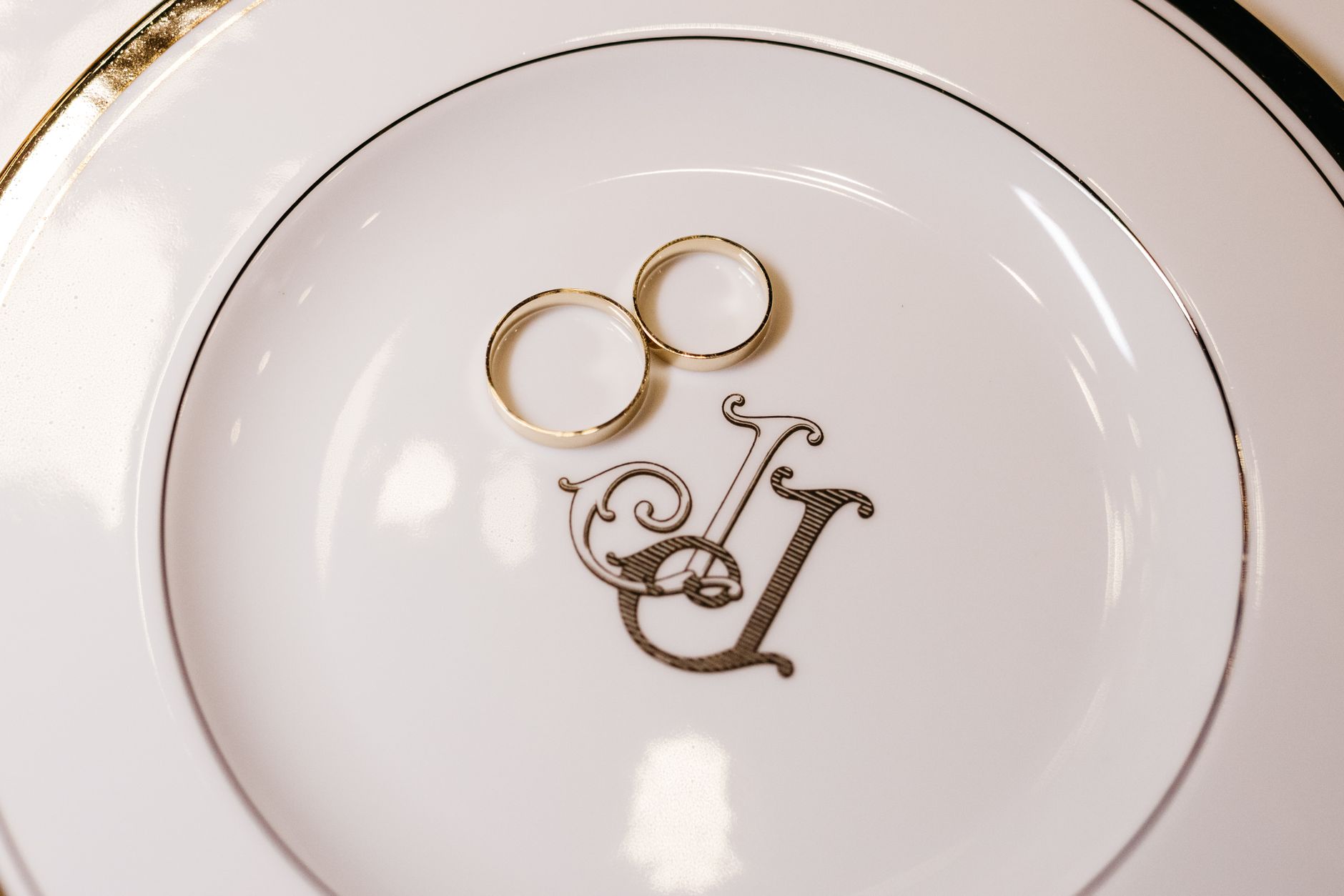
The three-letter monogram grew out of medieval marks used by nobility to identify household goods, linens, and letters. As literacy spread and household inventories grew, the mark moved from a signature-like glyph to the three-initial arrangement used today. Wedding trousseaus in the eighteenth and nineteenth centuries formalized the surname-in-the-middle style, because a bride's linens were understood to enter her husband's household under the household mark.
Modern couples who share a surname often keep the tradition. Couples who each keep their own surname, and children who use a hyphenated surname, sometimes drop the traditional stack in favor of the block monogram because the surname-in-the-middle rule assumes a single household surname.
Monograms and hyphenated surnames
A child named Ava Louise Sinclair-Rodriguez has a longer legal name than the three-letter monogram was built for. Common adaptations include:
- Use only the first surname (A L S) with the initial S in the middle in the traditional stack.
- Use only the second surname (A L R) in the same style.
- Print both surnames as two adjacent large initials, so the mark reads A L S R or A LSR.
- Use the block monogram in all four letters, printed the same size.
The choice usually depends on how the family already writes the surname in everyday life. If mail arrives addressed to Sinclair-Rodriguez, the four-initial monogram feels honest. If mail typically arrives addressed to Sinclair only, the three-initial monogram matches.
Comparing style at a glance
| Style | Reading order | Best for |
|---|---|---|
| Traditional stacked | First, LAST (large center), Middle | Heirloom pieces, formal linens, wedding stationery |
| Modern block | First, Middle, Last (same size) | Nursery signage, casual gifts, tote bags |
| Single-letter | Just the surname or just the first initial | Simple engraving, minimalist decor |
| Four-letter block | First, Middle, Last, Last | Hyphenated surnames, blended families |
Choosing a style before the name is finalized
Some parents pick the monogram style first, then the name. This is unusual and rarely a good idea, because monogram style is a decoration and the name is a person. What is helpful is running the initial check itself before you register: read the full three-letter check so you know which combinations to avoid.
If you plan to give heirloom pieces (a christening blanket, an engraved cup, a keepsake box), consider how the initials will read for the rest of the child's life. Wedding rings and gravestones inherit the same three letters. See how initials show up on heirloom pieces for the long view.
Frequently Asked Questions
Which style do most nursery gift vendors use by default?
The block monogram, with first-middle-last in reading order at the same size. Traditional stacked style is available on request from most quality embroiderers.
What if the child is named after a parent?
The monogram uses the child's initials, not the parent's. A child named after her mother has her own three-letter mark even if the letters are identical.
Are single-letter monograms considered informal?
They are more casual than three-letter monograms but not disrespectful. A single surname initial on stationery is standard for formal correspondence.
Can we skip the middle initial on the monogram?
Yes. A two-letter monogram in first-last order or last-first order is common, especially for children with long or unusual middle names.
Do same-sex couples adapt the tradition differently?
Some do, some do not. Couples who choose one shared surname use the traditional stacked style straightforwardly. Couples with two surnames often prefer a four-letter block monogram or a single-letter mark for each partner.
What about children whose parents are not married?
The monogram uses the child's legal surname, whatever it is. Style choice is independent of parental marital status.
Are monograms used outside the English-speaking tradition?
Yes, in most European heritage traditions. Order and letter sizing conventions vary. The three-letter monogram is broadly common across US, UK, French, and Italian family traditions.