Advertisement
The Petrelli family named their first daughter Aurelia. When their second was born, Grandma Rose slipped a note onto the hospital tray with three suggestions: Cordelia, Amelia, and Ophelia. All lovely. All ending in -lia. The Petrellis paused, because they had not planned to become the family with the matching-ending daughters. They just liked Aurelia.
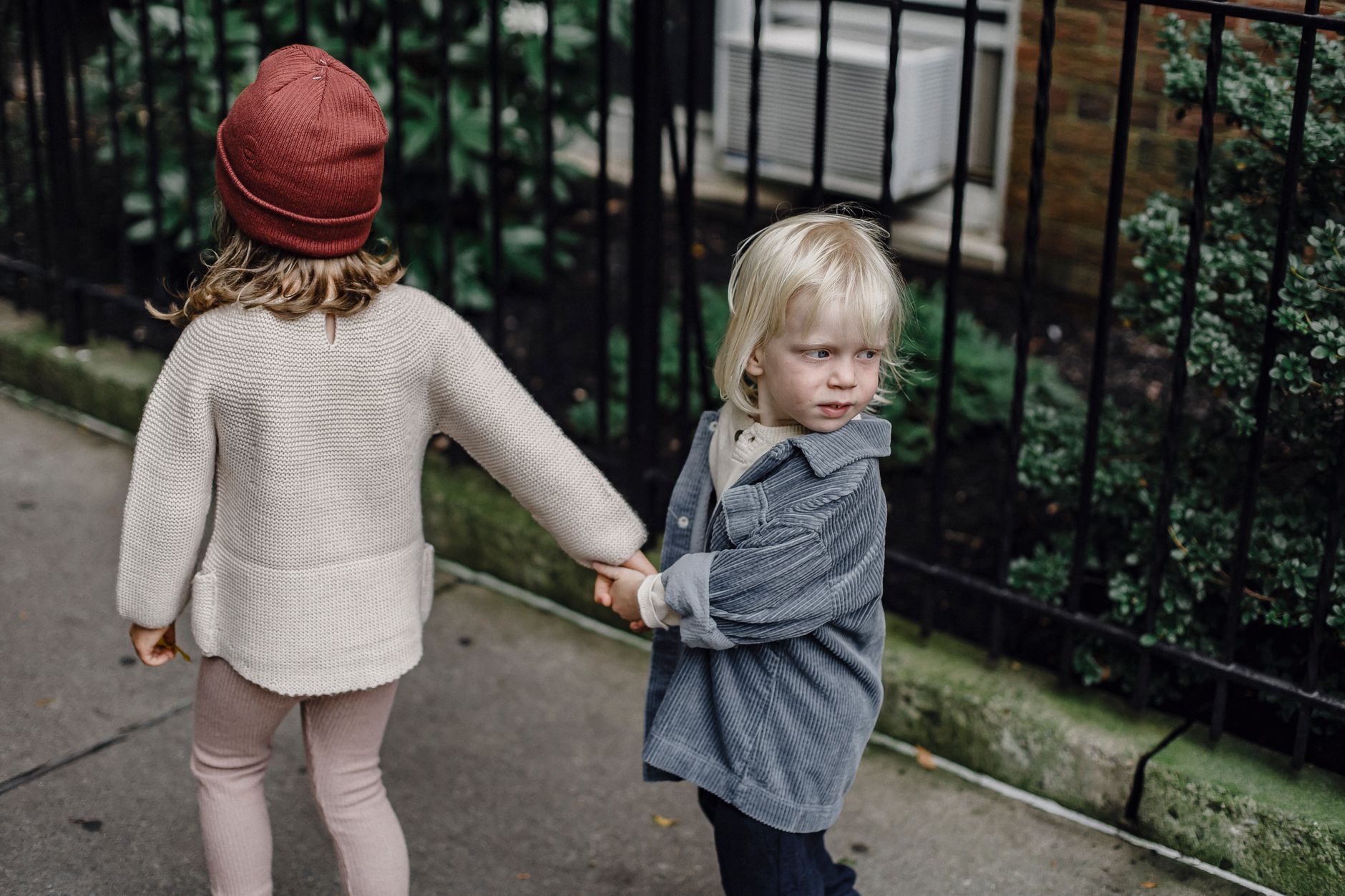
That pause is where this piece starts. Sibling consistency is real, and it matters, but the version most parents reach for on the second pregnancy is a caricature of it. There is a large distance between names that share a family feeling and names that read like a marketing collection.
Advertisement
What sibling coherence actually is
Coherence in a sibling set is not about matched letters, matched endings, or matched syllable counts. It comes from a shorter list of quiet properties:
- Similar formality register. Elizabeth and Charlotte sit together. Elizabeth and Brantlee do not.
- Similar era of origin, or a knowing spread across eras.
- Compatible cultural signal, so the set does not read like it was assembled from three unrelated regions by accident.
- A shared attitude about nickname behavior. Two names that both refuse nicknames feel like a pair.
- Comparable seriousness of length. Three three-syllable Victorian names, or three modern two-syllable names, feel intentional.
None of those properties requires the letters to match. That is the theme trap: hearing that consistency matters and reaching for the loudest, most visible form of it.
What the theme trap looks like in practice
The theme trap is the sibling set that reads as one visual joke instead of three separate people. Common versions include:
- All names begin with the same letter (Aiden, Ava, Asher).
- All names end with the same two letters (Kaitlyn, Kaydin, Kaelyn).
- All names rhyme (Jayden, Kayden, Brayden).
- All names come from one narrow cultural window (Braxton, Paxton, Jaxton).
Any single item on that list can work if the family truly loves it. But when a set matches on three or four such axes at once, the children read as a bundled subscription. Teachers notice. Coaches notice. The kids themselves notice around age nine.
Six checks to run on a draft sibling set
Before you commit, walk the draft set through six quick tests. This is the how-to at the heart of the piece.
- Read the names out loud in a random order. Do they still feel like separate names? Or do they slide into a pattern chant?
- Write each full name on a separate line. Look at the visual rhythm. If the eye finds the pattern in half a second, the pattern is too loud.
- Say the set with a hard cadence. Two names should introduce well without listing.
- Check formality parity. If one is a nickname on the certificate (Charlie) and the other is a full formal (Alexandra), the set feels lopsided.
- Check era parity. A 1920s revival name next to a 2020s coinage will always land as an accident unless you own it as a choice.
- Test the family email signature. Write "Love, the Petrellis. Aurelia and _____." If the blank looks obvious to a stranger, the second name is doing pattern work rather than name work.
Coherent versus themed at a glance

| Sibling set | Reads as |
|---|---|
| Eleanor, Julian, Beatrice | Coherent (Victorian, three-syllable, no matching letters) |
| Ella, Ethan, Emma | Themed (matching E, matching two-syllable) |
| Miguel, Sofia, Diego | Coherent (Spanish, all common in US Spanish-speaking families) |
| Braxton, Paxton, Jaxton | Themed (rhyming coinages) |
| Katherine, Charles, Margaret | Coherent (classic register, varied length) |
| Kayden, Kaylin, Kaylee | Themed (spelling and phonetics compressed) |
When breaking the pattern is the right answer
Sometimes the second name should break the first name's pattern on purpose. Two situations come up often.
First: the first name is unusual (Zephyr, Wren, Idris) and the parents chose it before they thought about siblings. Doubling down (Zephyr and Astoria) commits the family to a curated aesthetic forever. Breaking with a plain second name (Zephyr and Anna) tells the reader both children were chosen freely, which is closer to the truth.
Second: the first name honored a specific person (grandmother's Ruth, great-uncle's Malcolm) and the second name honors no one. Continuing the pattern of tribute-only names may not fit. Choosing a name because you like it, and letting the set be uneven, is honest.
The unusual-name-first problem is common enough that we wrote a separate walkthrough for it.
Worked example: the Peralta family
The Peraltas had a boy named Mateo. On child two they wanted a girl name that felt "in the same family." Their first drafts were Marisol, Marielle, and Milena. All started with M. When they read the set aloud, Mateo and Marisol sounded like a shampoo brand. Mateo and Milena sounded like siblings with unrelated first initials that happened to share the M. The second version was what they wanted, but they had drifted toward the first by momentum.
They stepped back and made a rule: the second name could start with any letter as long as it felt Spanish and stayed under three syllables. That gave them Elena, Lucia, and Sofia to choose among, along with Milena. They picked Lucia. Mateo and Lucia sits together because of era and language, not because of a shared M.
Reading a shortlist with your surname is a separate exercise. Our piece on full-name sound tests covers that.
Two extra pointers for a growing family
If a third child is possible or planned, hold at least one axis in reserve. Do not spend all the natural variation on child two. If the first two are two-syllable and Spanish, leave room to still make a coherent choice for child three even if you break syllable count. The theme extension question lives here.
If nickname patterns matter to your family, decide early whether the sibling set uses nicknames as everyday names or reserves them. See sibling nickname compatibility for the everyday-use question.
See also our comparison of twin and triplet naming approaches.
Frequently Asked Questions
Do sibling names really have to match at all?
No. They have to belong to the same family, which is a different thing. A sibling set of Grace, Owen, and Louisa has zero visible matching but reads as coherent because all three names share a register and a decade of revival.
Is it wrong to have all children start with the same letter?
Wrong is too strong. It creates real logistical friction (mail, teachers, forms) and it commits future children to the pattern. If both parents love that pattern, own it. If only one parent loves it, reconsider.
What if the first child's name was chosen quickly and now feels off?
That is a common tension and is discussed in the piece on naming a second child after a quick first. Short version: do not use child two to compensate for child one.
How do I know if I have hit the theme trap?
Show the shortlist to two friends without saying they are siblings. If both friends spontaneously identify the pattern, the pattern is louder than the names. Rebalance.